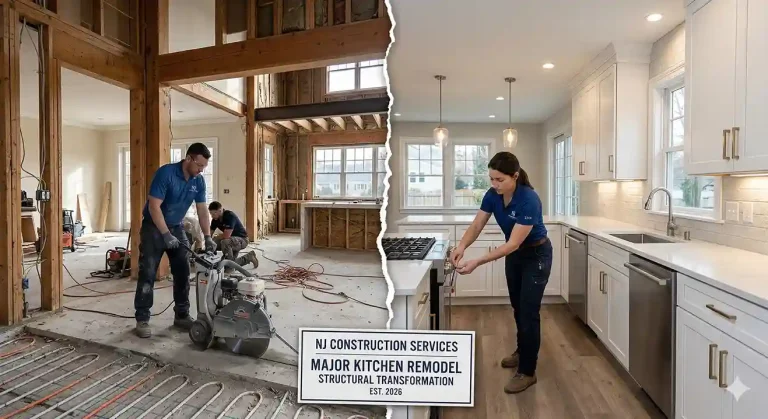
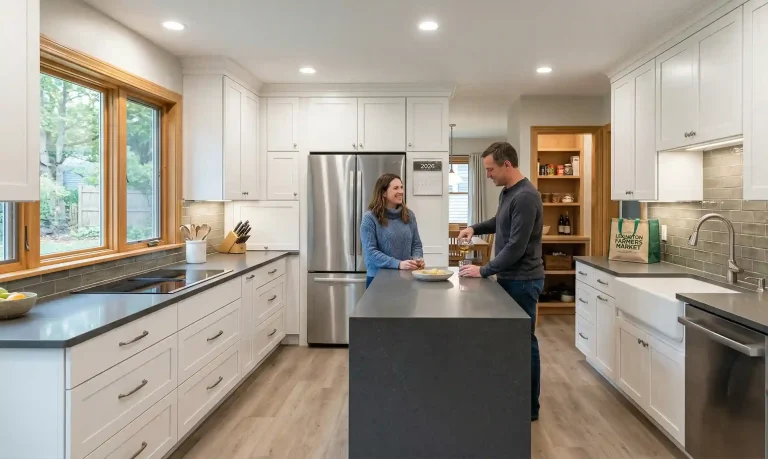
Why kitchen remodel is one of the best home improvements

You are standing in your kitchen on a Tuesday evening in 2026, trying to balance a cutting board on a countertop that feels two sizes too small, while dodging a cabinet door that never stays shut. The lighting is dim, the workflow is clunky, and despite your best efforts to organize, the space simply refuses to cooperate with your lifestyle. This isn’t just about old tile or dated appliances; it is about a fundamental friction in the heart of your home.
The kitchen is no longer just a place to boil pasta. It has evolved into a high-tech laboratory, a remote office, and the primary social hub of the modern Massachusetts residence. When a space carries that much weight, any inefficiency feels amplified. This is why, as we navigate the housing landscape of 2026, a kitchen renovation remains the undisputed heavyweight champion of home improvements. It is the one project that simultaneously tackles lifestyle quality, structural integrity, and long-term financial equity.
Understanding the True Scope of Kitchen Remodeling
At its core, a kitchen remodel is a complex orchestration of multiple construction disciplines. It is the intersection where structural framing meets fine aesthetics. Unlike a bedroom refresh or a living room paint job, the kitchen involves critical infrastructure: plumbing, electrical grids, gas lines, and load-bearing considerations.
In 2026, the definition of a “best” improvement is one that offers a compounding return. When you choose to invest in this space, you are not just buying new cabinets; you are recalibrating the “engine room” of your property. It requires a deep understanding of how different materials interact under heat, moisture, and high-traffic conditions.
How the Process Functions in 2026
Modern remodeling follows a “system-first” approach. We look at the building envelope and interior systems as a singular unit. This means ensuring that your insulation and vapor barriers are up to current Massachusetts energy codes before the first piece of cabinetry is ever leveled. It is a sequence of events where the invisible work—the rough-in—dictates the success of the visible finish carpentry.
Real-World Applications
For many homeowners, the application is practical. You might be looking to open up a cramped floor plan to create better sightlines into the living area. Others focus on “aging in place,” incorporating ergonomic heights and accessible storage. In every scenario, the goal is to remove the “pain points” of daily life through intelligent design and robust engineering.
Why Professional Work Trumps Amateur Efforts
There is a tempting allure to the DIY movement, but in the realm of high-stakes kitchen renovations, the gap between professional execution and amateur attempts is wider than ever.
Professional vs. Amateur Execution
A professional general contractor understands the “why” behind the code. While an amateur might see a wall and assume it can be moved, a pro identifies the load-bearing points and the hidden MEP (Mechanical, Electrical, and Plumbing) runs within it. The finish quality is where the difference becomes glaring. Professional miters, seamless countertop joins, and perfectly leveled cabinetry are the hallmarks of seasoned experts.
Rough Carpentry vs. Structural Framing
It is vital to distinguish between these two. Structural framing is the skeleton; it’s the heavy lifting that ensures your second floor doesn’t sag when you install that massive new granite island. Rough carpentry involves the blocking and backing needed to support heavy wall-hung cabinets. If you miss the structural framing requirements, your beautiful 2026 kitchen will literally begin to pull away from the walls within years.
Framing vs. Finish Carpentry
Think of framing as the bone and finish carpentry as the skin. You cannot have a beautiful skin without a straight bone. In high-end remodels, we often find that we have to “sister” old floor joists or plane down studs just to get a flat enough surface for the finish carpenters to do their job.
| Feature | Professional Contractor | Amateur/Handyman |
| Code Compliance | Full permits and inspections | Often bypassed or misunderstood |
| Structural Integrity | Calculated load-bearing analysis | Guesswork and “best effort” |
| Material Sourcing | Commercial grade, high-durability | Big-box retail grade |
| Warranty | Contractual labor and material bonds | No recourse for future failure |
| Timeline | Managed phases and sub-crews | Unpredictable, dragging schedules |
The Hidden Benefits of a 2026 Kitchen Transformation
The benefits of a remodel go far beyond the “wow” factor of a social media post. In 2026, we are seeing a massive shift toward Integrated Home Efficiency.
Energy Optimization: Modern appliances and smart lighting systems significantly reduce the carbon footprint of the home.
Psychological Wellness: A decluttered, well-lit, and functional kitchen reduces cortisol levels during morning rushes and evening meal prep.
Market Liquidity: If you decide to sell, a kitchen renovated with high-quality materials and classic design ensures your home spends fewer days on the market.
Structural Updates: Remodeling allows us to inspect for old water damage, mold, or outdated wiring that could be a fire hazard.
Common Mistakes in Kitchen Renovation
Even with the best intentions, homeowners often fall into traps that compromise the longevity of their project.
Ignoring the Work Triangle: Placing the sink, stove, and refrigerator too far apart creates an exhausting cooking environment.
Skimping on Lighting: Relying only on a single overhead light. A great kitchen needs task, ambient, and accent lighting.
Choosing Trends over Timelessness: Installing “fad” colors that will look dated by 2028 instead of sticking to high-quality neutrals with custom accents.
Underestimating Storage: Forgetting to account for small appliances like air fryers, blenders, and espresso machines that clutter countertops.
Poor Ventilation: Using a cheap recirculating fan instead of a high-CFM external vent that actually removes grease and odors.
Red Flags: Sinais de Alerta Reais
When you are planning your project, keep an eye out for these critical red flags that indicate a project is headed for disaster:
Lack of Permits: If a contractor suggests “saving money” by not pulling permits, they are likely trying to hide substandard work from the city inspector.
Poor Structural Planning: Any plan that involves removing walls without a clear load-path analysis is a major safety risk.
Cheap Materials: Particleboard cabinet boxes disguised with pretty doors will swell and fail the moment there is a minor sink leak.
Bad Measurements: If your kitchen designer doesn’t measure three times (floor, mid-wall, and ceiling), your cabinets won’t fit the “out of plumb” reality of your house.
Code Violations: Electrical outlets placed too far from the sink or gas lines that aren’t properly pressured-tested are non-negotiable failures.
Practical Checklist for Massachusetts Homeowners
Before you sign a contract for your 2026 remodel, use this checklist to ensure you are on the right track:
[ ] Does the layout prioritize the “Golden Triangle” flow?
[ ] Have we verified if any walls are load-bearing?
[ ] Is there a dedicated lighting plan for under-cabinet and island tasks?
[ ] Are we using moisture-resistant backing behind the sink area?
[ ] Have we checked the local building codes for Danvers or Andover?
[ ] Is the electrical panel capable of handling new high-draw appliances?
[ ] Are we hiring kitchen remodeling contractors in danvers ma who understand local historic home requirements?
[ ] Does the contract include a clear debris removal and cleanup plan?
The Professional Remodeling Process: Step-by-Step
Understanding the “how” helps demystify the chaos of construction. A professional 2026 remodel follows a strict hierarchy of operations.
Phase 1: Planning and Demolition
We start by protecting the rest of your home with dust barriers and floor protection. Demolition isn’t just swinging hammers; it’s a surgical removal of old materials while preserving the integrity of the plumbing and gas stacks.
Phase 2: Structural and Rough-In
This is where the magic happens. We address any sagging floors and move the “guts” of the kitchen. New circuits are run for induction cooktops and high-efficiency ovens. If you are working with kitchen remodeling contractors in dedham ma, this phase is critical to ensure compliance with local building standards.
Phase 3: Insulation and Drywall
We seal the building envelope. Using high-density insulation and moisture-resistant drywall ensures the kitchen remains comfortable and mold-free for decades.
Phase 4: Cabinetry and Countertops
The “bones” are now ready for the “skin.” We level and scribe the cabinets to your walls. In 2026, precision is everything; even a 1/16th of an inch deviation can cause issues with stone countertop installation.
Phase 5: Finish Carpentry and Details
This is where we install the crown molding, baseboards, and backsplash. This final layer of craftsmanship defines the aesthetic quality of the entire project.
Expert Insights: Why 2026 is the Year for Quality
We are seeing a trend where homeowners are moving away from “fast-fashion” renovations. They want durability. When working with kitchen remodeling contractors in lynn ma or kitchen remodeling contractors in north andover ma, the focus is on sustainable materials and timeless finishes.
The ROI of a kitchen remodel isn’t just about the dollar amount; it’s about the Utility Value. How much is it worth to you to have a kitchen that works for you instead of against you? In cities like Wilmington or Andover, where home values are robust, a high-end kitchen is often the deciding factor in a luxury sale.
FAQ: Deepening the Strategic Context
1. How long does a full kitchen remodel typically take in 2026?
A comprehensive remodel usually spans 8 to 12 weeks. This accounts for the meticulous structural work, the curing times for various adhesives, and the precision required for custom countertop fabrication.
2. Is an induction cooktop worth the switch from gas?
In 2026, induction is highly recommended for its energy efficiency, safety, and precise temperature control. It also simplifies the ventilation requirements compared to high-BTU gas ranges.
3. Why is finish carpentry so expensive compared to rough carpentry?
Finish carpentry requires a higher level of tooling and patience. It involves visible wood grains, intricate joints, and the “art” of making a kitchen look like a piece of furniture rather than just a storage area.
4. Do I really need a permit for a simple cabinet swap?
If you are moving any plumbing, gas, or electrical lines—which almost every 2026 remodel does—you absolutely need a permit to protect your home’s resale value and insurance coverage.
5. How do I choose between different countertop materials?
In 2026, engineered quartz and ultra-compact surfaces like Dekton are leading the market for their stain resistance and heat durability, though natural quartzite remains the king of high-end aesthetics.
6. Can I live in my house during the renovation?
It is possible, but we recommend setting up a temporary “kitchenette” in another room. The dust and noise are significant, and having a sanctuary away from the construction zone is vital for your sanity.
7. How does a kitchen remodel affect my property taxes in MA?
Significant improvements can lead to a reassessment, but the increase in tax is usually a small fraction of the massive jump in your home’s market equity.
8. What is the most important “hidden” cost to prepare for?
The “behind the wall” repairs. Once we open the walls, we may find outdated wiring or old leaks. We always recommend a 10% contingency fund for these structural surprises.
Taking the Next Step in Your Home Journey
Choosing to remodel your kitchen is a commitment to your future quality of life. It requires a partner who understands the nuance of Massachusetts architecture and the technical demands of 2026 construction standards. Whether you are looking for kitchen remodeling contractors in wilmington ma or kitchen remodeling contractors in andover ma, the key is to prioritize transparency, structural integrity, and high-level craftsmanship.
For a project of this magnitude, you need more than a builder; you need an orchestrator who manages the complexity so you can enjoy the results. If you are ready to stop fighting your kitchen and start loving it, it is time to consult with a specialist who views your home as a long-term asset.
Contact a General Contractor in MA | NJ Construction
Ready to transform your home?
Our team is dedicated to providing the structural expertise and fine finish carpentry your project deserves. Let’s build something that lasts.
Call us today: (267) 214-1428
Our Massachusetts Service Areas
We take pride in serving homeowners across the state with high-quality construction and remodeling. From the historic streets of Marblehead to the growing neighborhoods of Framingham, our expertise is available in your local community.
- Kitchen Remodeling Contractors In Danvers, MA
- Kitchen Remodeling Contractors In Dedham, MA
- Kitchen Remodeling Contractors In Lynn, MA
- Kitchen Remodeling Contractors In North Andover, MA
- Kitchen Remodeling Contractors In Wilmington, MA
- Kitchen Remodeling Contractors In Andover, MA
- Kitchen Remodeling Contractors In Lawrence, MA
- Kitchen Remodeling Contractors In Peabody, MA
- Kitchen Remodeling Contractors In Marblehead, MA
- Kitchen Remodeling Contractors In Belmont, MA
- Kitchen Remodeling Contractors In Chelsea, MA
- Kitchen Remodeling Contractors In Swampscott, MA
- Kitchen Remodeling Contractors In Revere, MA
- Kitchen Remodeling Contractors In Everett, MA
- Kitchen Remodeling Contractors In Framingham, MA
- Kitchen Remodeling Contractors In Topsfield, MA
- Kitchen Remodeling Contractors In Burlington, MA
- Kitchen Remodeling Contractors In Billerica, MA
- Kitchen Remodeling Contractors In Bedford, MA
- Kitchen Remodeling Contractors In Reading, MA
- Kitchen Remodeling Contractors In Winchester, MA
- Kitchen Remodeling Contractors In Arlington, MA
- Kitchen Remodeling Contractors In Haverhill, MA
- Kitchen Remodeling Contractors In Lexington, MA
- Kitchen Remodeling Contractors In Melrose, MA
- Kitchen Remodeling Contractors In Methuen, MA
- Kitchen Remodeling Contractors In Middleton, MA
- Kitchen Remodeling Contractors In Natick, MA
- Kitchen Remodeling Contractors In North Reading, MA
- Kitchen Remodeling Contractors In Saugus, MA
- Kitchen Remodeling Contractors In Tewksbury, MA